
Junior recruiter vs senior recruiter: The difference is employer context (not talent)

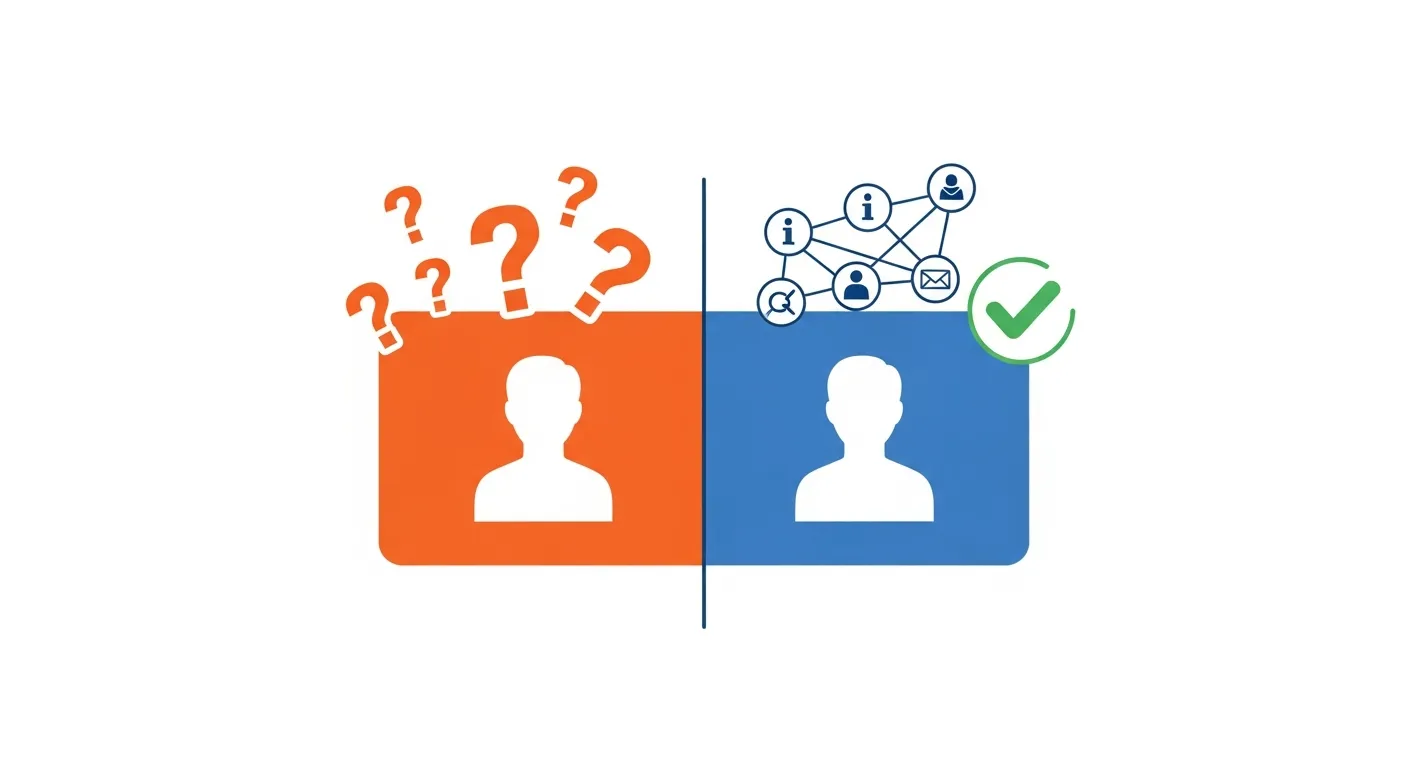
You have two recruiters on your team.
Lisa, 8 months in. Enthusiastic, eager to learn, works hard. She understands vacancies, can do Boolean searches, reads candidate profiles carefully. You’ve trained her well.
Mark, 6 years of experience. Your best recruiter. Same vacancies as Lisa.
You give them both a DevOps Engineer vacancy for an e-commerce scale-up. Requirements: experience with high-traffic infrastructure, CI/CD tooling, cloud-native development.
One week later:
Lisa delivers 12 candidates. After screening, 5 turn out to fit. Mark delivers 8 candidates. 7 of them are worth interviewing.
What’s the difference? Lisa works just as hard. She understands the vacancy. She uses the same search queries. Yet the result is completely different.
The problem isn’t a lack of talent. It’s a lack of context.
What Lisa sees vs what Mark knows
Lisa opens a profile: “DevOps Engineer at Coolblue — 3 years of experience — Amsterdam”.
She sees: job title checks out, experience checks out, location checks out.
She adds the candidate to her shortlist.
Mark opens the same profile.
He sees: “DevOps Engineer at Coolblue — 3 years of experience — Amsterdam”.
But he also knows: Coolblue is e-commerce, high-traffic platform, Black Friday peaks, real-time inventory management, automated deployments 20+ times per day.
This is exactly what the vacancy requires.
The second profile: Where the difference becomes painful
Lisa opens the next profile: “DevOps Engineer at Philips — 4 years of experience — Eindhoven”.
She sees: job title checks out, more experience than the previous profile, location acceptable.
She adds this candidate too.
Mark opens the same profile.
He knows: Philips medical devices, waterfall development cycles, compliance-heavy environment (FDA approvals), long release cycles, legacy infrastructure.
This doesn’t fit at all with an e-commerce scale-up where you deploy 30 times a day.
Lisa sees two DevOps Engineers. Mark sees two completely different careers.
The difference isn’t intelligence. It’s context about employers.
Why you can’t train this
You’ve tried.
Training sessions. Intake meetings. Feedback conversations. You have Mark review Lisa’s shortlists before they go to clients.
It helps, but not enough. Because market knowledge can’t be learned in a course.
Mark knows what Coolblue does because he placed a candidate there 4 years ago. He knows what Philips does because a client asked him 3 years ago for “someone from a similar environment.”
He knows 200+ employers in IT. Not because he studied them, but because he encountered them. 6 years running. A few new names with every vacancy.
Lisa knows maybe 30.
And for the remaining 170 profiles in a search of 200 — she’s guessing.
The cost of this knowledge gap
1. Inconsistent quality to clients
Your client receives Lisa’s shortlist. 12 candidates, 5 truly fit.
Two weeks later the same client receives Mark’s shortlist for a different role. 8 candidates, 7 fit.
The client sees the difference. And asks for Mark on the next vacancy.
2. Review overhead for you
You have to check every shortlist from Lisa before it goes to the client. You open each profile. You google the employers you don’t know. You adjust the shortlist.
That costs you 2-3 hours per week. Time you’re not spending on business development or strategic conversations.
3. Slow development
Lisa has been at it for 8 months now. She’s gotten better. But she’s nowhere near Mark’s level.
How much time does she still need? Another 2-3 years. Maybe longer.
And by then — will she still be there? Recruitment has 25% annual turnover. There’s a good chance Lisa will be working somewhere else in 18 months.
All that investment in her development — gone.
4. Dependency on seniors
Mark is indispensable. When he’s sick, the team notices immediately. If he were to leave, you’d have a gap of 6-12 months before someone reaches his level.
Your business depends on knowledge that sits in one person’s head.
What if market knowledge were in the system?
Imagine: Lisa opens the same profile.
“DevOps Engineer at Coolblue — 3 years of experience — Amsterdam”.
But now she also sees:
Employer context:
- E-commerce platform, 15+ million orders per year
- High-traffic infrastructure, 50,000+ visitors/hour during peak times
- Agile development, 20-30 deployments per day
- Cloud-native stack (AWS), microservices architecture
- Real-time systems: inventory, pricing, checkout flow
Match with vacancy: 92%
- Checkmark: High-traffic experience
- Checkmark: CI/CD in production environment
- Checkmark: Cloud-native development
- Checkmark: E-commerce domain knowledge
Lisa adds the candidate — with good reason.
She opens the next profile.
“DevOps Engineer at Philips — 4 years of experience — Eindhoven”.
Now she sees:
Employer context:
- Medical devices, FDA-regulated products
- Waterfall development, long release cycles (quarterly basis)
- On-premise infrastructure, legacy systems
- Compliance-first culture, change management procedures
- Enterprise IT, no high-traffic web platforms
Match with vacancy: 34%
- No high-traffic experience
- Slow release cycles, no CI/CD culture
- On-premise, not cloud-native
- Medical devices is not e-commerce
Lisa skips this candidate — just as Mark would.
Before/after: Lisa with SourceLens
Before (without employer context):
- 200 profiles in search
- Lisa knows 30 employers, guesses for 170 others
- Delivers 12 candidates
- 5 truly fit (42% hit rate)
- 2-3 hours screening per vacancy
After (with SourceLens employer context):
- 200 profiles in search
- Lisa sees context on 18 dimensions for all 200 employers
- Delivers 8 candidates
- 7 truly fit (88% hit rate)
- 45 minutes screening per vacancy
The difference: Lisa now delivers the same quality as Mark. From week 1.
Why this works (and training doesn’t)
Training gives general knowledge
“E-commerce companies usually work agile.” “Enterprise environments often have longer release cycles.”
But: What type of company is VanMoof? And Picnic? And Rituals?
Training doesn’t give you a database of 200+ employers in your head.
SourceLens gives specific context
For every company in every profile:
- Sector and industry
- Organization type (startup/scale-up/corporate/SME)
- Customer segment (B2B/B2C, Enterprise/SMB)
- Product/service complexity
- Tech stack and development culture
- Organization size and growth stage
18 dimensions. Automatically. For the last 8 employers of every candidate.
You can’t train this. But you can automate it.
For recruitment agencies: The business case
Investing in people vs investing in systems
You’re currently investing:
- 6-12 months of training per junior
- 2-3 hours of review per week for shortlists
- Risk that juniors leave (25% turnover/year)
SourceLens Professional: EUR 249/month for your entire team.
That’s less than the hours you currently spend reviewing shortlists. And it works from day 1.
ROI calculation
Current situation (5 recruiters):
- 2 seniors (good), 3 juniors (inconsistent)
- 3 hours review per week = EUR 4,800/year (EUR 40/hour)
- Junior delivers 50% fewer placements in first year = missed revenue
- Turnover = 6 months onboarding per new recruiter
With SourceLens:
- Juniors deliver the same quality from day 1
- Review time drops by 70% = EUR 3,360/year saved
- Faster time-to-productivity = more placements
- Knowledge sits in the system, not in heads
Break-even: Within 1 month.
The choice for recruitment agencies
Option A: Keep investing in people
- Hope that juniors stay
- Hope that seniors share their knowledge
- Keep reviewing shortlists
- Accept inconsistent quality
Option B: Invest in systems
- Market knowledge in the tool, not in heads
- Juniors perform immediately as seniors
- Consistent quality to clients
- Scalable growth without quality loss
This isn’t a “people vs technology” choice. It’s: what role does technology play in your quality?
Junior recruiters: This isn’t personal
If you’re reading this as a junior recruiter — this isn’t criticism of you.
You work hard. You’re smart. You’re doing your best.
The problem isn’t your talent. The problem is that you don’t know 90% of the employers in your search. And that’s not your fault — that’s just how market knowledge works.
Seniors have had 5 years to get to know those 200 employers. You’ve had 8 months.
SourceLens gives you those 5 years of experience in 8 seconds per candidate. It makes you better at your job. Faster. More confident.
You deliver better shortlists. You earn more trust from your manager. You place more candidates.
And that’s what it’s all about.
Conclusion: Context is the skill you can’t learn (but can automate)
The difference between a junior and a senior recruiter isn’t in Boolean search skills. Not in interviewing technique. Not in reading CVs.
The difference is in context about employers.
And that context can’t be learned in a training. You build it up over years.
Unless you automate it.
SourceLens automatically analyzes the last 8 employers across 18 dimensions — for every profile in your search. Employer context is no longer a competitive advantage of seniors. It becomes available to everyone on your team.
Junior delivers like a senior. From day 1. Without extra training.
Try SourceLens free for 14 days at sourcelens.ai
Arthur Balabrega is the founder of SourceLens and has 20 years of experience in recruitment. He has run thousands of searches and knows from experience: the difference between good and bad sourcers is employer context. That’s why he built SourceLens — so that context is available for every team, from day 1.